F1
Helical screw pile
COMMERCIALGalvanised helical pile under a telescoping jack leg
Driven by a compact excavator auger head, target 15 min per pile. No trench, no pour; unscrews to leave.
01 / 08E3
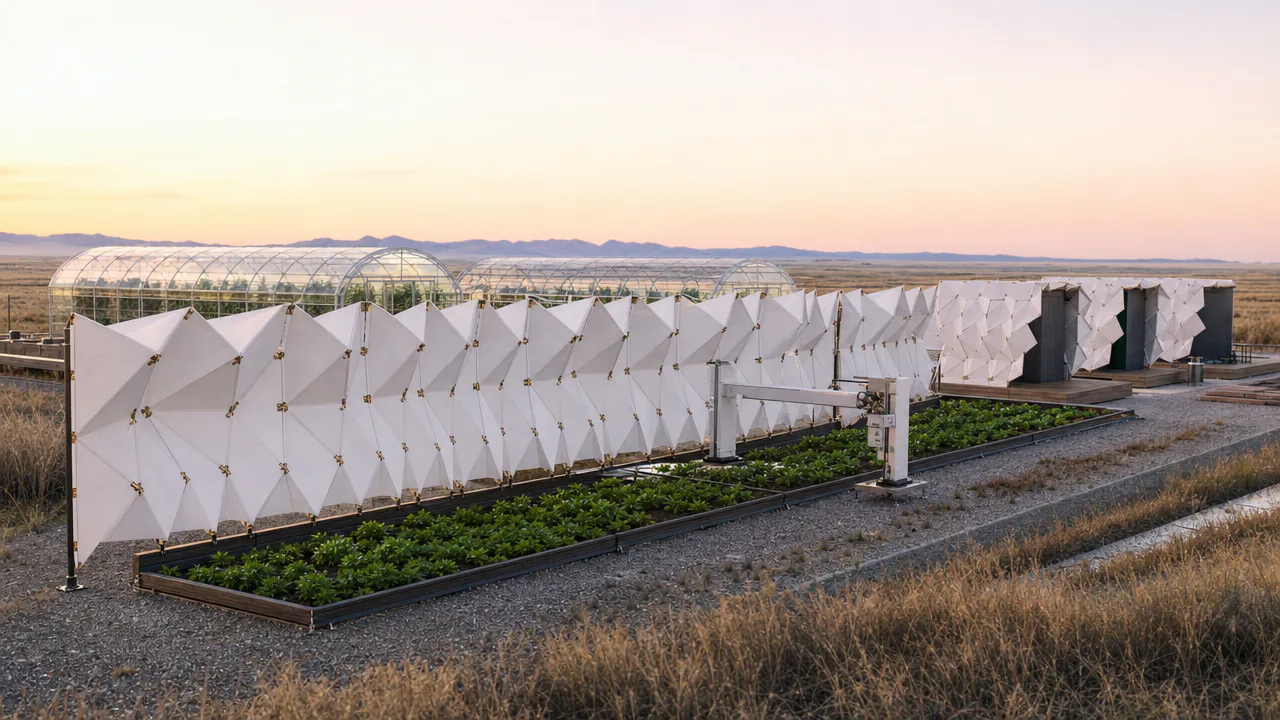
Desert
Water from night air. Shade from folded light.
40 / 5°CDesign day / nighttarget
E3 01 of 08 · Hot-arid · Atacama, Death Valley
Water from night air. Shade from folded light.
Climate, in numbers
Threats the kit is set against
Screw piles in gravel; dunes need a site-specific case
Screw pileCOMMERCIAL
MIURA-W + glazed solar-thermal collectors (PV-T preheat) to KUMO; heat-pump tank for cold nights
Recycle first (MIZU, 90–95% net) + KUMO harvest for drinking and cooking; commercial hydropanel or truck port for make-up
YOSHI-6G glazed → opaque white facets with OPV strips
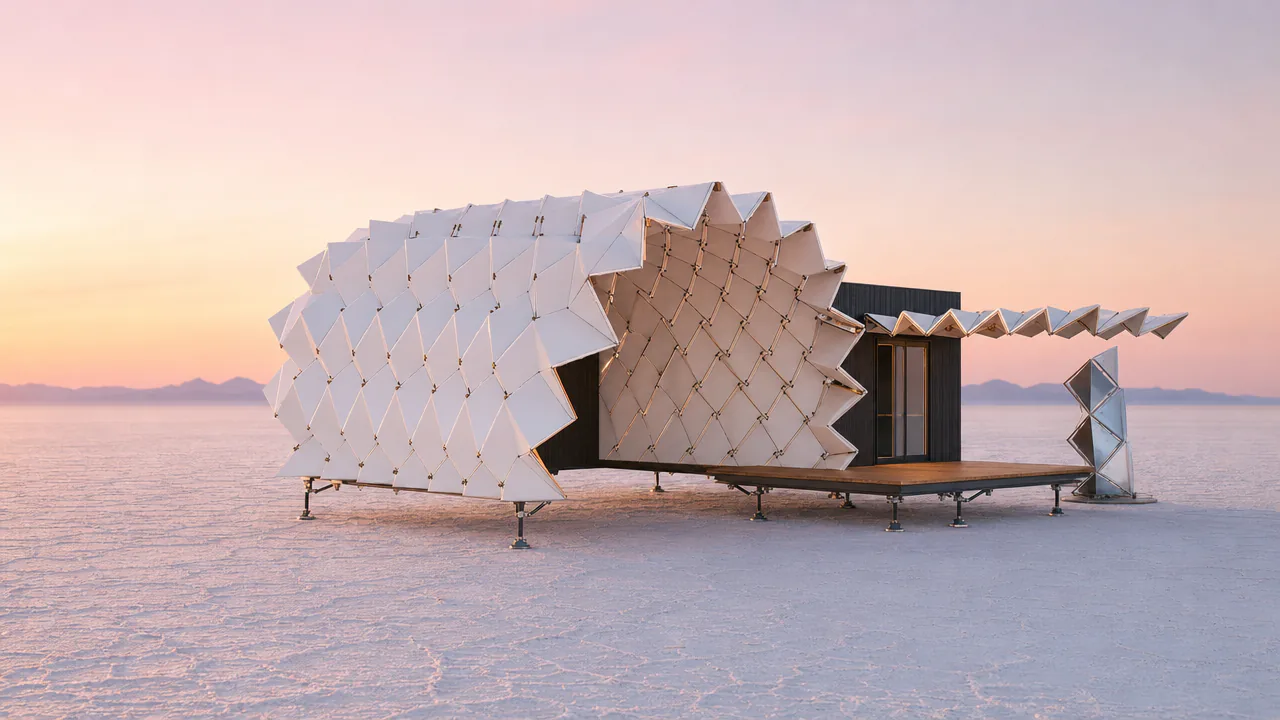
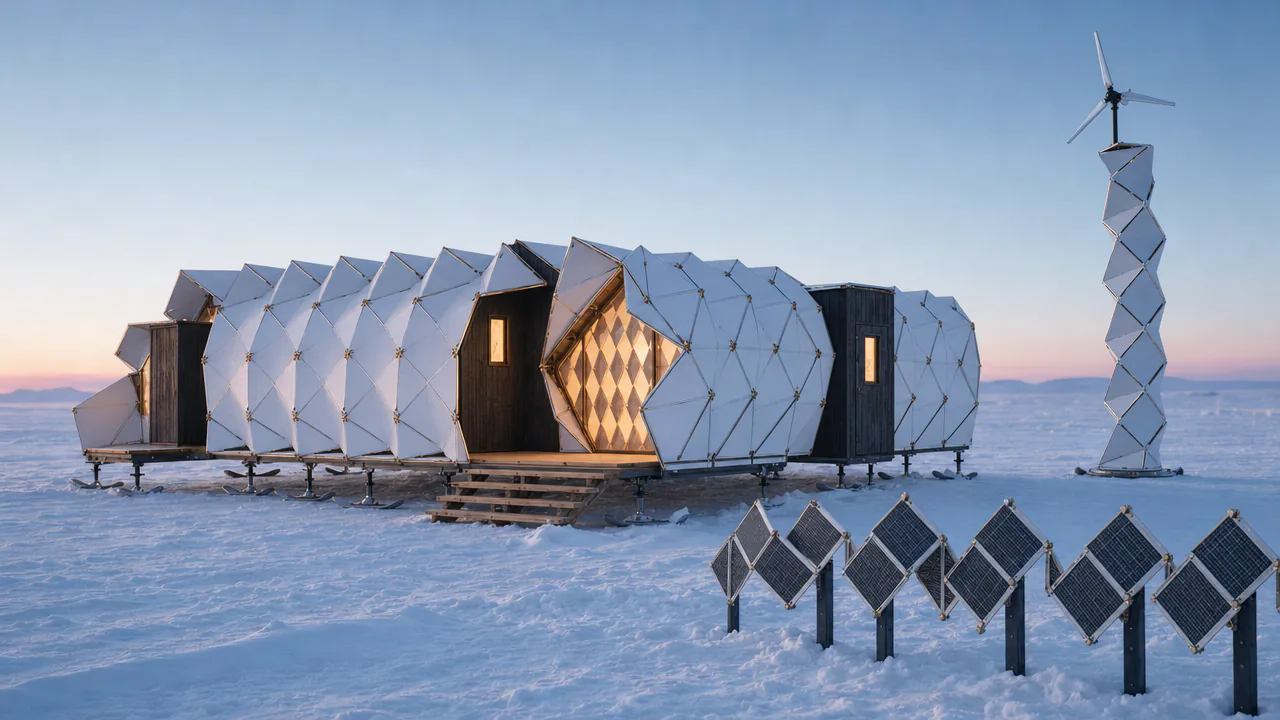
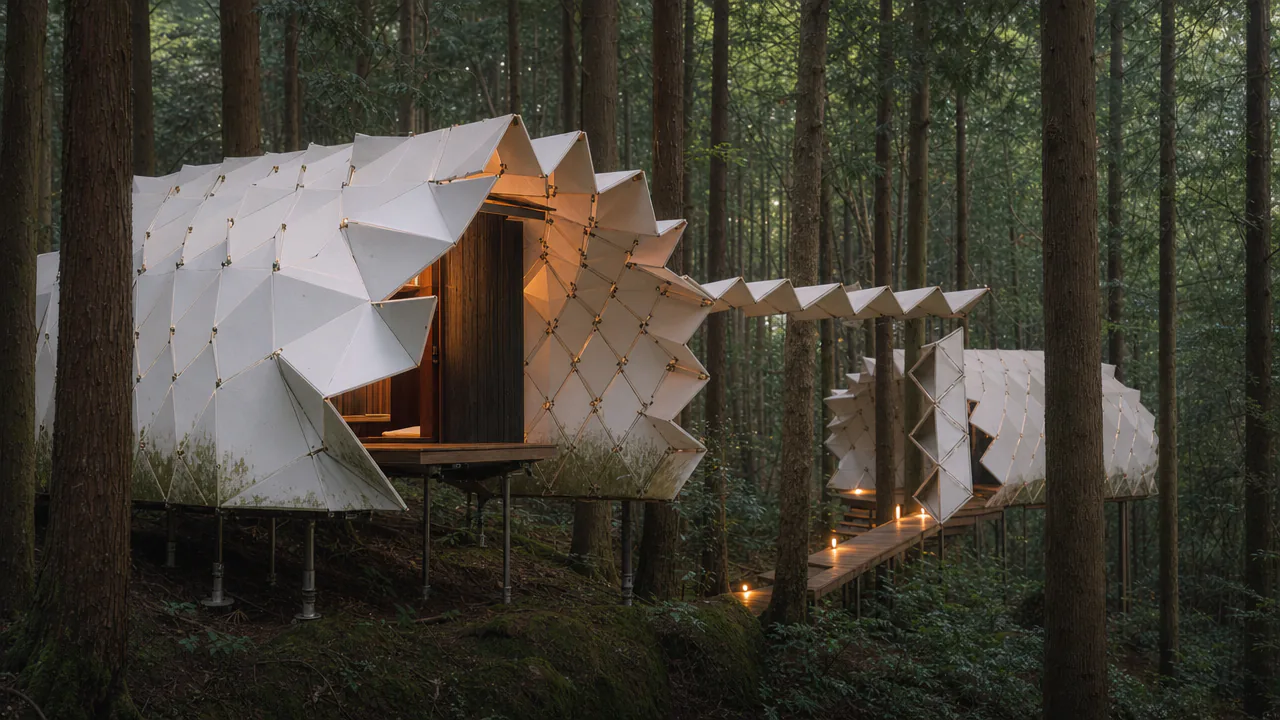
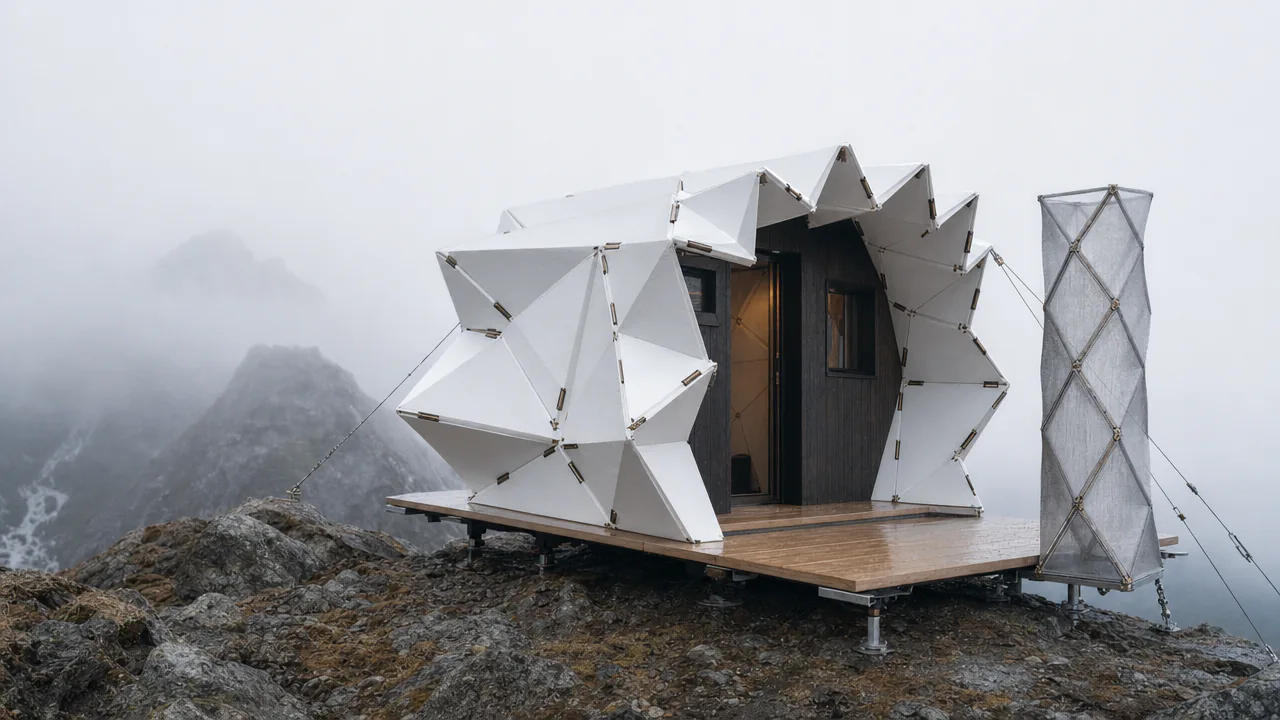
One YOSHI-4 vault room, a KURA core, a KRES mast, a BYOBU PV fence and a water rack. Change the ground and watch the kit adapt: the ASHI feet swap, the legs re-level to the terrain, facets flip from white to black, and add-ons arrive where the climate asks for them.
Drag to orbit · click a part · click the canvas, then scroll to zoom
ASHI foot
Screw pile
Skin
—
Water
—
Power
—
Add-ons in view
—
Every habitat stands on the same telescoping leg: a commercial jack rated 2–5 t, a pin or lock-nut height lock, and ±115 to ±230 mm of trim for fine levelling. Only the foot changes with the ground. Screw piles are the prototype foot; the other five each need their own structural case.
Galvanised helical pile under a telescoping jack leg
Driven by a compact excavator auger head, target 15 min per pile. No trench, no pour; unscrews to leave.
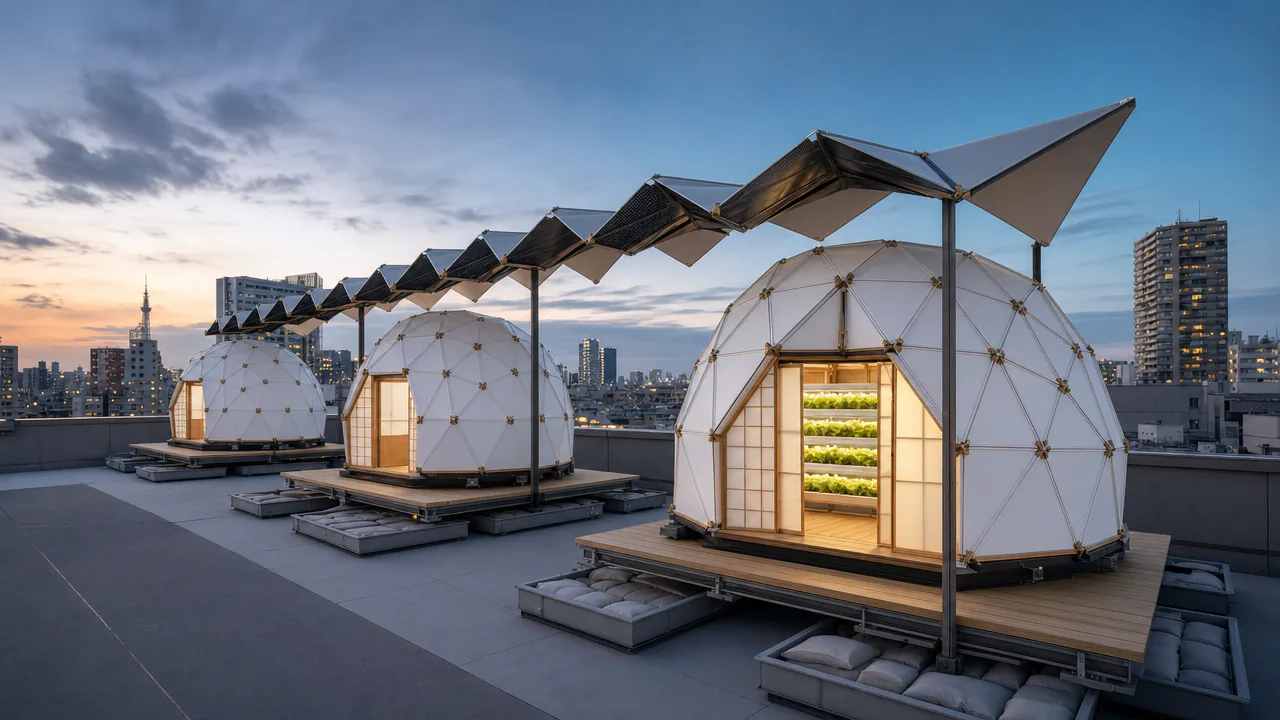
Ballast pallet box with bagged sand on a protection mat
Zero roof penetrations for HOSHI-class pods after a structural check. YOSHI-4 needs a spreader steel frame on columns or beams.
UHMW ski on a pivot saddle, hydraulic jack leg
Halley VI pattern: re-jack as snow builds, tow to relocate. Halley moved 23 km in 2016–17.
Stainless rock plate, spherical seat, drilled rock anchors
Pin-locked jack legs; a replaceable impact absorber only where an impact case exists.
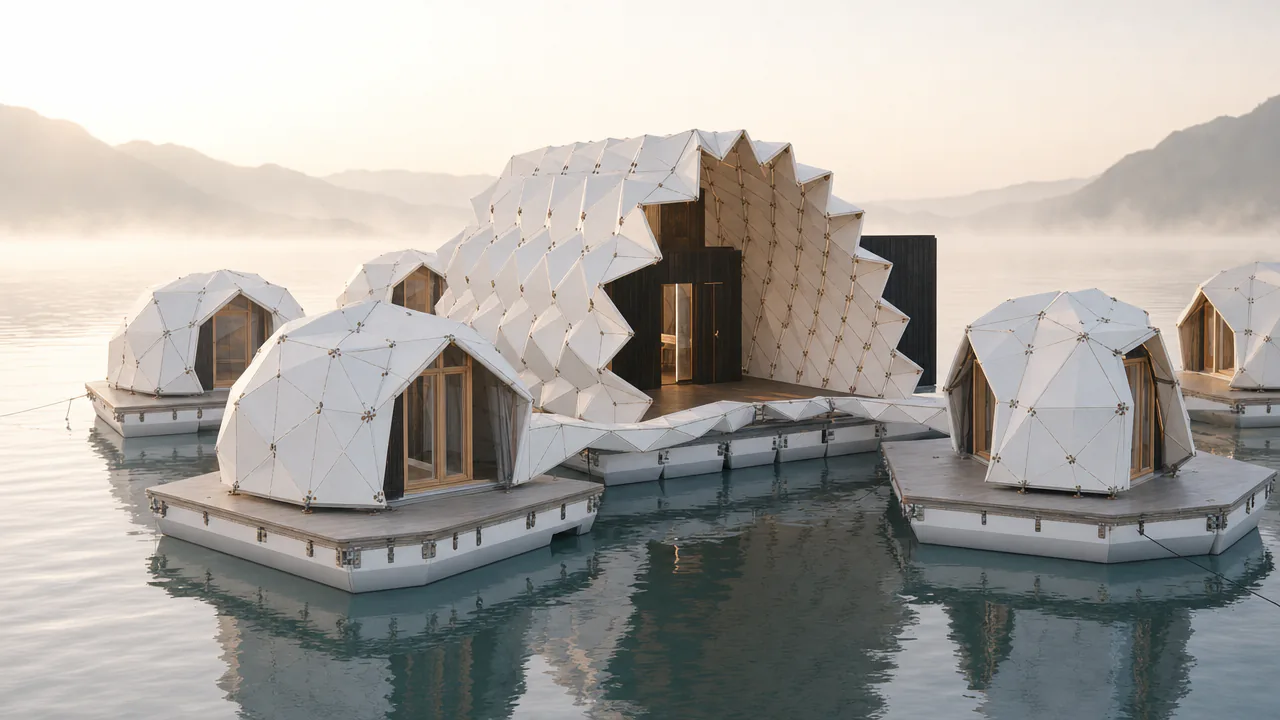
Interlocking HDPE pontoon cubes, moored; PEX heat-exchange loop beneath
Buoyancy, mooring, biofouling and permits still to be solved. Hull water doubles as a heat sink.
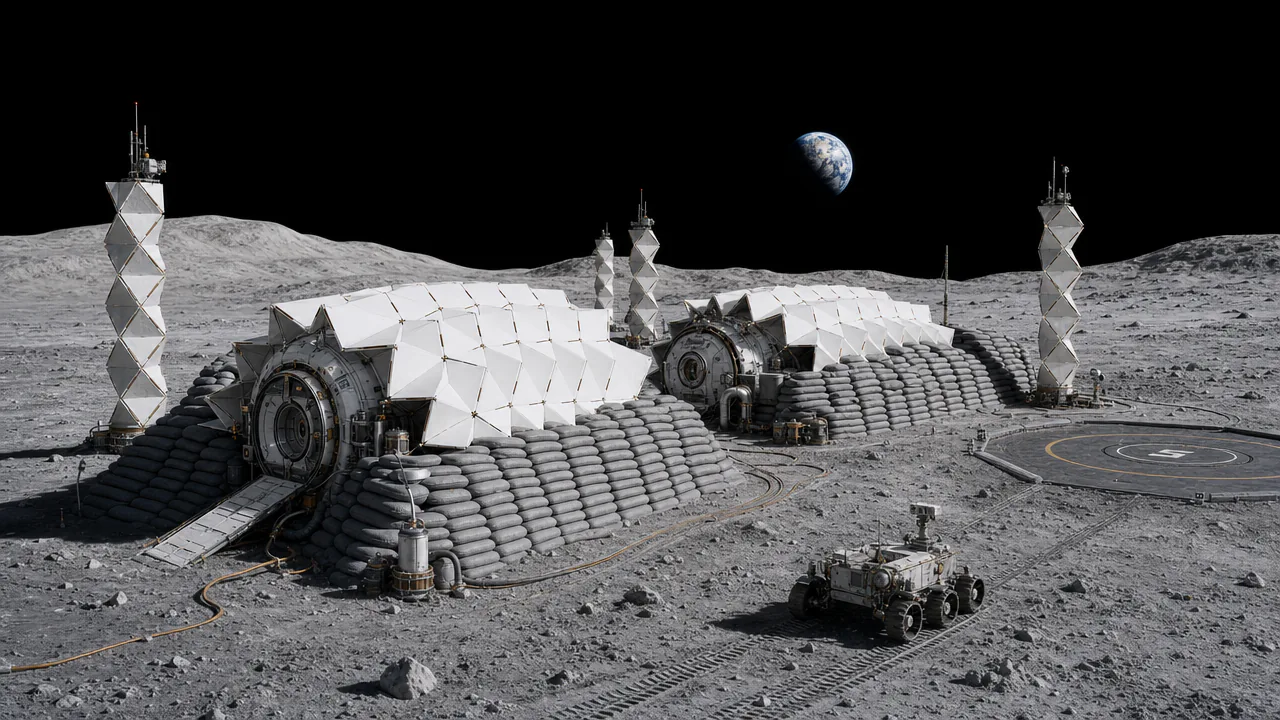
Woven bags filled on site, on laser-sintered pads
Local mass instead of shipped mass; the same leg and jack carry one sixth of the weight.
About 3 % (1.8°) over 7.28 m. Coarse slope goes to pile cut-off height or a stepped sill.
YOSHI-4 dead load 21.6 kN on 4 legs, against 2–5 t rated jacks.
≥ 1.5 × 1/n of the wind shear, through X-bracing or a moment-rigid sill.
Compact excavator auger head. No trench is dug; the site is restored on leaving.
No penetrations means wind is resisted by weight alone. Drag the design wind speed and watch what a YOSHI-4 shell asks of its ballast — and why the concept sends HOSHI pods to roofs first and puts a vault on a spreader frame over columns.
Range 34–48 m/s, as used in the M03 load case.
calculated
q = ½ · 1.25 · V²
U = q · 0.8 · 26.5 m² · B ≥ U / 0.6 − D
H = q · 0.8 · 21 m² · N ≥ 1.5 H / μ (μ 0.4) − D
Sliding governs: at the top of the range the shell wants about 7 t of ballast on a roof built for people and snow. Hence: HOSHI-2 pods first (about 1–2 t each), YOSHI-4 only on a spreader steel frame bearing on columns or beams, or with mechanical tie-downs.
The vault, core, mast and fence ship the same everywhere. Feet, skins, the water source and the power mix are the settings. Pick a column to send the whole page there.
| Kit element | ||||||||
|---|---|---|---|---|---|---|---|---|
| ASHI foot | Screw pile COMMERCIAL | Ski SPECULATIVE | Screw pile COMMERCIAL | Rock plate SPECULATIVE | Pontoon SPECULATIVE | Screw pile COMMERCIAL | Ballast crate SPECULATIVE | Regolith bag SPECULATIVE |
| Skin | SK1 white-out facets | SK2 Janus, black side out | SK6 moss / yakisugi | Polar panels + fog-mesh skins | SK4 sweating shell / SK3 ETFE | SK1 white + SK3 ETFE greenhouses | SK1 BaSO4 roof skin | Regolith bags over a softgoods bladder |
| Water | Recycle first (MIZU) + KUMO-12 for drinking | Snowmelt via RESCH roof valleys + MIZU | Stream, membrane + UV, then MIZU | Fog / rain + spring + MIZU | Rain + MIZU + solar MD still | Well or rain + MIZU | Roof rain + MIZU recycling | Imported + closed-loop recycling |
| Power | MIURA-W + PV-T heat to KUMO | BYOBU bifacial + small HAWT + backup generator | Micro-hydro + BYOBU-PV in clearings | Micro-hydro + BYOBU-PV + heat-pump tank | MIURA-W + floating PV + water-source heat pump | BYOBU-PV windbreak + MIURA-W | MIURA-W (+ optional grid tie) | Fission 1–10 kWe + PV + thermal store |
Foot maturity follows M03: screw piles, jacks and bracing are commercial components; ski, pontoon, rock-plate, rooftop-ballast and regolith feet are speculative until each has its own structural, buoyancy or mooring case.
→ Next